

The Museum of Witchcraft in Hólmavík is open every day from June 1 - September 15. Time: 10:00-18:00. At other time of year the museum is open by request at any time.
- Admission kr. 700.-
- Information:
- Tel: (+354) 451 3525
- e-mail: galdrasyning@holmavik.is
GPS 65° 42,392 N 21° 39,940 W
Click here for pictures from the museum
The Museum Icelandic of Sorcery & Witchcraft The Strandir area is located in northwest Iceland on Húnflói Bay along the
eastern coast of the West Fjords. It has always been a somewhat remote area,
even though today it is only a three-hour drive from the capital. Throughout the
centuries, Icelanders have always believed that the people of Strandir are more
knowledgeable in the occult. Maybe one of the reasons for this belief is that
witch burning actually started in Strandir: in 1654, three men were burned for
witchcraft in the northernmost peninsula of Trékyllisvík. Those burnings marked
the beginning of witch hunting in the country, and lasted approximately 30
years. When over, 21 persons had been burnt alive: 20 men and 1 woman, and the
cases taken for judgement were almost 200. That is a rather high percentage,
since the population in Iceland during that time was only around
50,000.
Today, people of Strandir use this history to draw tourism. In Hólmavík
village, located in center of Strandir, The Museum of Sorcery & Witchcraft
was opened in 2000, the first of three sites in the area aimed at increasing the
number of tourists to Strandir. This museum has become one of the most popular
ones in the country, and visitors come from all over the world to learn about
how Icelandic witchcraft differs to that of other countries. In Iceland, there
were no witches flying on broomsticks, and most witches were males who practiced
heathen sorcery that was suddenly considered dangerous after the reformation in
1550. At the Museum in Hólmavík people learn about those involved in the
witch-hunt: the prosecutors and the prosecuted, and their alleged crimes.
 The Museum of Sorcery & Witchcraft also explains the folklore connected
to magic, and visitors can learn how to make themselves invisible, how to create
extra money, how to know who has stolen from you and how to deal with ghosts.
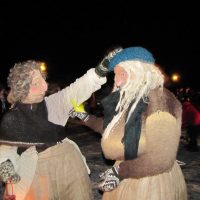
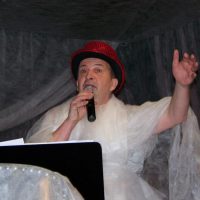
Guests at the museum can even take part in a special ceremony: helping a local
sorcerer to scare away ghosts and evil spirits, which for many visitors is the
highlight of their stay in Iceland. All information is available in English, and
the local sorcerer even jumps between languages for extra inspiration.
The Museum of Sorcery and Witchcraft in Hólmavík is open from June 1st -
September 15th daily from 10:00 to 18:00. At other times of the year it is open
by request, even for one visitor at a time.
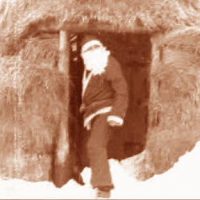
 The second part of the museum, The Sorcerer’s Cottage, was opened in Klúka
in Bjarnar fjörður in 2005, and is located in the next fjord north of Hólmavík
about 30 minutes away by car. The Cottage is a house made of turf and rocks,
built the old, traditional Icelandic way. There, guests can see the living
conditions of tenant farmers on the poor farms, and have a glimpse into their
world and how they fought for survival. Visitors learn how to fish well, how to
make sheep docile, how to win a girl and how to act if something unclean is
around. The site around the Sorcerer’s Cottage will be dedicated to the
Icelandic trolls, who are one part of the culture of Icelandic sorcery.
The Strandir region offers a variety of exciting outdoor activities such as
hiking tours, angling or nature research from the shoreline to the mountain.
Scheduled boat tours are operated from Drangsnes village by Steingrímsfjörður
fjord to the beautiful puffin island of Grímsey, just a short ride from the
mainland. Puffin season is from the middle of May until the end of July. It is
also possible to sail from Norðurfjörður fjord to Hornstrandir peninsula for
hiking, a magnificent area where you will find yourself in pristine nature where
few travel.
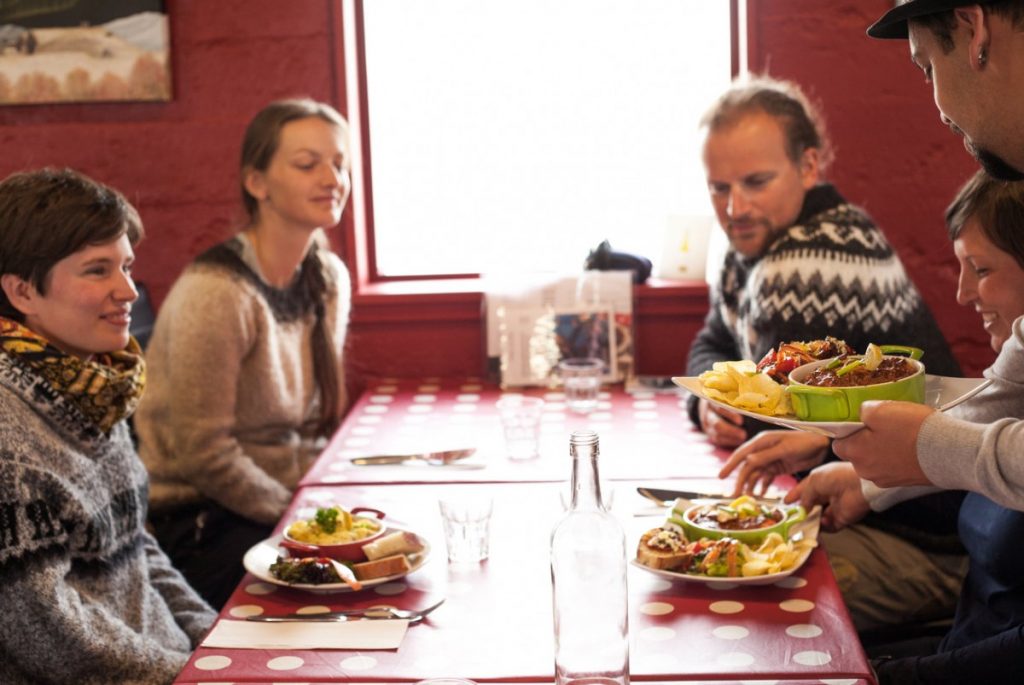
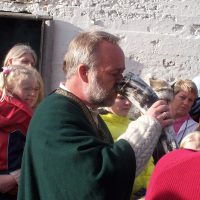
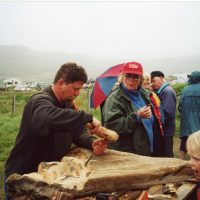
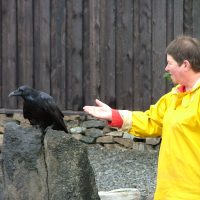
Guests at the museum in Holmavik
|